

Taking Stock: Progress!

99 stories of progress from the Year of the Wood Snake—Will Tait
‘2026 may feel like it has already delivered a year’s worth of upheavals, but in the traditional Chinese calendar, the year has only just begun. To honour that turning, as the last skins of the ‘wood snake’ fall away, here are 99 stories from the year that was: inspirational trail-mix to pop in our saddlebags as we gallop forth into the Year of the Fire Horse. As you’ll see, these stories are gathered in nine themes, from improved human lives to the restoration of our living world, to cosmic revelations. May they offer uplifting sustenance with each bite.
[J]ust under a hundred servings of information nourishment that demonstrate humanity’s ability to care and collaborate, scrutinise and solve, imagine and improve.
1. Disease Elimination
‘It takes years of dedication and multi-agency coordination to eliminate a disease, and yet 17 countries hit that milestone in 2025 - the most in one year ever. Trachoma bit the dust in Egypt, Mauritania, Senegal, Burundi, Fiji. The first-ever ‘triple elimination’ by the Maldives. Brazil became the first country of over 100 million to stop mother-to-child transmission of HIV. The list goes on.
2. Disease Reduction
‘Deaths from the world’s deadliest infectious disease, tuberculosis (down 29% since 2015) may be set for a continued decline with the introduction, in 80 countries, of mobile x-ray units linked to an AI program. Signs of tuberculosis are highlighted in vivid, heat map-like scans, revealing cases that would otherwise go unseen.
3. Disease Prevention
‘Having declared 2024 the ‘highest-ever impact year for immunisation’ The Gavi Alliance maintained impressive momentum throughout 2025: $9 billion secured to immunise 500 million children by 2030, and an extra $90 million freed up for their focus on malaria, with a negotiated 25% price cut in the R21 vaccine.
4. Disaster Response
‘What do Ebola outbreaks and natural disasters have in common? We’re ready for them. In the first half of 2025, 94% fewer people died in weather-related disasters compared to the historical six-month average. And in September an Ebola outbreak in the Democratic Republic of the Congo was isolated and sequenced in just 24 hours.
5. Cleaner Air
‘Are we entering the clean-air-ocene? Global concentrations of sulphur dioxide, nitrogen oxides, carbon monoxide and organic carbon are all falling. The EU has been smashing clean-air pledges ahead of schedule. And the average citizen now lives 2.9 years longer in China thanks to air-quality reforms.
6. A New Era of Global Health
‘“For the first time in our species’ history, infectious disease is not the dominant threat,” proclaimed The Lancet in October in a sweeping analysis revealing a new era of global health. Deaths from TB, diarrhoea and HIV have plunged by between 20% and 49% since 2010.
7. Feeling Safe
‘“Do you feel safe walking alone at night in the city or area where you live?” Gallup has asked globally since 2006. Their 2025 report cited the highest positive response yet. Yes: 73%. Asia-Pacific, Western Europe, Latin America, Caribbean and sub-Saharan Africa all showed an uptick.
8. Poverty Reduction
‘Millions of people across the world are escaping poverty. Last year UNICEF reported 95 million fewer children living in poverty since 2014, and India declared the 60-million-strong state of Kerala free of extreme poverty. Mexico, Nepal, Iraq - just three of 12+ other countries recording impressive drops.
9. Better Living in Brazil
‘33 million Brazilians went to bed hungry just three years ago - now it’s off the hunger map. Social cash transfers have played a decisive role in lifting 6.5 million out of poverty since 2022, and poverty reduction in turn has driven a 60% drop in teenage births in the country since 2000.
10. Less Violence
‘Last year World Bank data revealed a 25% fall in the global homicide rate since 2000. In the US the murder rate fell to its lowest level in 70 years. Nevertheless, media splurges coverage on terrorism and murder, leaving the real killers - heart disease and cancer - in the shadows.
11. Child Welfare
‘Laws banning child marriage have proliferated across Asia, Africa and Latin America over the past year, and the 70+ list of countries banning corporal punishment grew longer, with the addition of the Czech Republic and Thailand. Meanwhile the global under-five mortality rate has fallen by over 50% since 1990.
12. Record Harvests
‘Population growing, soil depleting, a gnawing sense that global famine is just a few failed harvests away. But what does the data say? Record levels of wheat, rice and soybean production. Same for pears and lemons. Coffee and corn set for record highs in 2025-26. The global larder is well-stocked.
13. Rice Breakthroughs
‘2025 gave us three rice production breakthroughs with huge potential impact for this primary global staple: a Chilean cultivation innovation that cuts water use in half; discovery of a gene in a hardy Indian variety that skyrockets heat tolerance; a new strain that reduces methane emissions by 70%.
14. Smart Tech
‘We’re meeting the challenges of a changing climate in extraordinary ways. Last year, 38 million farmers across India received 30 days’ notice of the arrival of the monsoon, accurately predicted by machine learning. In Nigeria, smart irrigation is delivering consistent flows despite unpredictable rains.
15. Simple Tech
‘“Smart” tech isn’t always about algorithms. In Chile’s Atacama - the planet’s driest desert - fog nets are harvesting coastal mist to supply 1,400 litres of water daily for production, and a simple mix of yeast, sugar and water that attracts predator insects is fast becoming cotton’s low impact pesticide.
16. Free Meals for Kids
‘We’re seeing a growing global focus on nourishing young minds and bodies with national school meal programmes now serving 466 million children worldwide, up by 80 million since 2020. Most impressive? Indonesia’s plan to feed all 80 million of its schoolkids, which kicked off last year.
17. Water, Sanitation Access
‘In August the WHO and UNICEF served up a bucket of welfare wins. The decade from 2015 saw one of the fastest expansions of basic services ever recorded: 961 million people gained safe drinking water, 1.2 billion gained safe sanitation, 1.5 billion gained access to basic hygiene. Health and dignity on the rise.
18. Electricity Access
‘“Keeping the lights on” is tricky if you’ve never had access to electricity. Fortunately the number of humans in that category dropped by 292 million in the last decade, despite a corresponding global population rise of 760 million. Kenya, Nepal, Mozambique all significantly increased access in the last year.
19. Solar Health
‘Solar energy, a major facilitator of humanity’s increased access to electricity, is also playing a pivotal role in remote health. Solarisation in Zambia, Ethiopia, Uganda, Malawi and Pakistan is enabling 24 hour patient care and providing the consistent 2 to 8 degrees Celsius required for vaccine storage.
20. Solar Food
‘As they soak up the sun, solar panels provide an unanticipated service to agriculture: shade. Strawberry growers taking advantage of ‘agrivoltaics’ are reporting 18% increase in yields, and South Korea has incorporated the growing of cabbages around solar arrays into their food security strategy.
21. Education Access
‘UNESCO reported a global surge in girls’ access to education. And support is growing for the Convention on the Rights of the Child - the most widely accepted human rights treaty globally - to expand its education guarantee to obligate free schooling from pre-primary through to secondary. . . .’
Click the link above to read 78 more good news bites . . .
fixthenews.com
GRAZING: Where have all the cows gone?—Bianca Lopez (h/t Helga Recke)
‘Grazing animals provide protein and livelihoods for people around the world, with about one-quarter of land surface used for managed grazing. Overgrazing can degrade ecosystems, a fact that has led to widespread calls to reduce livestock density. However, Anadón and Sala found that stocking rates have already declined over the past 25 years in many regions, including Europe, North America, Australia, and northern Africa. Developing countries with growing rates of meat consumption increased stocking rates, but regions that decreased stocking had higher meat production efficiency and used more supplemental cereal feed for animals. In addition to the environmental effects of producing more nongrazing animals, livestock destocking may cause changes to land use, carbon cycling, and biodiversity, but these effects are understudied.’
science.org | @ScienceMagazine
+ Global destocking of extensive livestock: An overlooked trend with Earth system consequences—Proceedings of the National Academy of Sciences, José D. Anadón and Osvaldo E. Sala
‘Significance: Grazing by livestock is the most extended land use on Earth, and our planet is perceived as rapidly degrading due to overgrazing. On the contrary, this study reveals that regions containing 42% of grazing livestock species are experiencing reductions in stocking rate, while stocking rates increased in other regions. The duality of increases and decreases of stocking rates challenges the prevailing focus on overgrazing in research. We offer a more nuanced understanding of extensive livestock systems and highlight the urgent need to reconsider the role of global grazing in shaping food security, biodiversity, and the carbon, water, and energy dimensions of global environmental change. This perspective suggests the need for rethinking research and policy priorities.
‘Abstract: Managed grazing is the most extensive land use on Earth. The prevailing narrative is that global rangelands, from grasslands to deserts, are being degraded by overgrazing due to overstocking. This perception arises from scientific literature, which contains an order of magnitude more studies on overstocking than on reductions in stocking rates. In contrast, over the past 25 y, regions representing almost half (42%) of global livestock have experienced reductions in stocking rates rather than the expected increases. We evaluated socioeconomic, technological, and climatic direct drivers, as well as indirect drivers, of global stocking patterns. Trade and climate had no detectable effects, whereas technological shifts and meat consumption had an impact on stocking rates. Direct drivers were largely controlled by human population and gross domestic product. Wealthier regions, with slower population growth, greater feed supplementation, and reliance on nongrazing livestock, reduced stocking rates. Less affluent regions, facing rapid population growth and rising meat demand but limited technological and feed resources, increased stocking rates. The overlooked reductions in stocking rates may have major ecological consequences at regional and global scales. Destocking can impact biodiversity, fire regimes, potentially increase carbon sequestration, and modify land–atmosphere fluxes. These effects are not simply the reverse of overstocking, as some consequences are irreversible, including state transitions and local extinctions. The skewed pattern of publications toward overstocking and overgrazing led to a perception of widespread degradation and had consequences on research direction and policy.
‘Livestock grazing is the most extensive land use on Earth, occupying roughly 25% of the terrestrial surface. Beyond its ecological importance, managed grazing is essential for human livelihoods, especially in rural and economically vulnerable regions. More than a billion people worldwide rely directly on livestock for sustenance and income, whether through open grazing or mixed farming systems. Extensive livestock occurs mostly in drylands, which occupy 40% of the terrestrial surface and where dryland agriculture is often unviable. . . .
‘Global implications of destocking: Our work highlights the global and often overlooked extent of rangelands undergoing stocking reductions, as well as the understudied ecological processes arising from these changes and their consequences. Lands being destocked present distinct challenges and opportunities for reconciling livestock production with ecological conservation, rural livelihoods, and global environmental sustainability in a rapidly changing world. Our findings call on the research and policy communities, as well as society at large, to develop robust strategies for managing both destocked and overgrazed lands. . . .’
The overwhelming focus on overstocking contrasts with the scarcity of studies on the process of destocking.
pnas.org | @pnas
A musical ode to Indian wool and life on the Deccan Plateau—Suresh Eriyat
‘In Desi Oon, the Indian animator Suresh Eriyat gives voice to an unlikely narrator: the wool of the Deccani sheep, long central to the livelihoods of communities across the Deccan Plateau in India. This wool, which provides both income and material for a wide range of everyday items, is increasingly under pressure as shifts in the economy and land use disrupt traditional systems. Although India produces large quantities of fleece, much now goes to waste in a market dominated by imported wool.
‘This musical stop-motion film, animated entirely from the wool itself, highlights the cultural, ecological and economic significance of the fibre and the lives it sustains. At its heart is Balumama, a devoted herder whose life embodies generations of pastoral knowledge. Developed over a year, in close collaboration with herding communities, the film is playful yet deeply reflective, weaving song and texture to reveal the fragile beauty of a way of life under strain.’
Watch the charming 8-minute video here:
Arresting headlines
The end of animal testing?: Both the UK and US Governments have pledged to end research using animals, but is such a goal realistic? And how might it change medical research?—The Lancet (h/t Brian Perry)
U.N. says it’s in danger of financial collapse because of unpaid dues: The world body warned it would run out of money by July and have to close its New York headquarters if countries, namely the United States, did not pay annual dues that amount to billions of dollars. . . . The United States is responsible for about 95 percent of the money owed to the United Nations, about $2.2 billion—New York Times
Aid cuts could lead to millions of deaths by decade’s end, new study finds: The Lancet that estimates that by the end of this decade, between 9.4 million and 22.6 million people could die as a result of foreign aid cuts—Devex Newswire
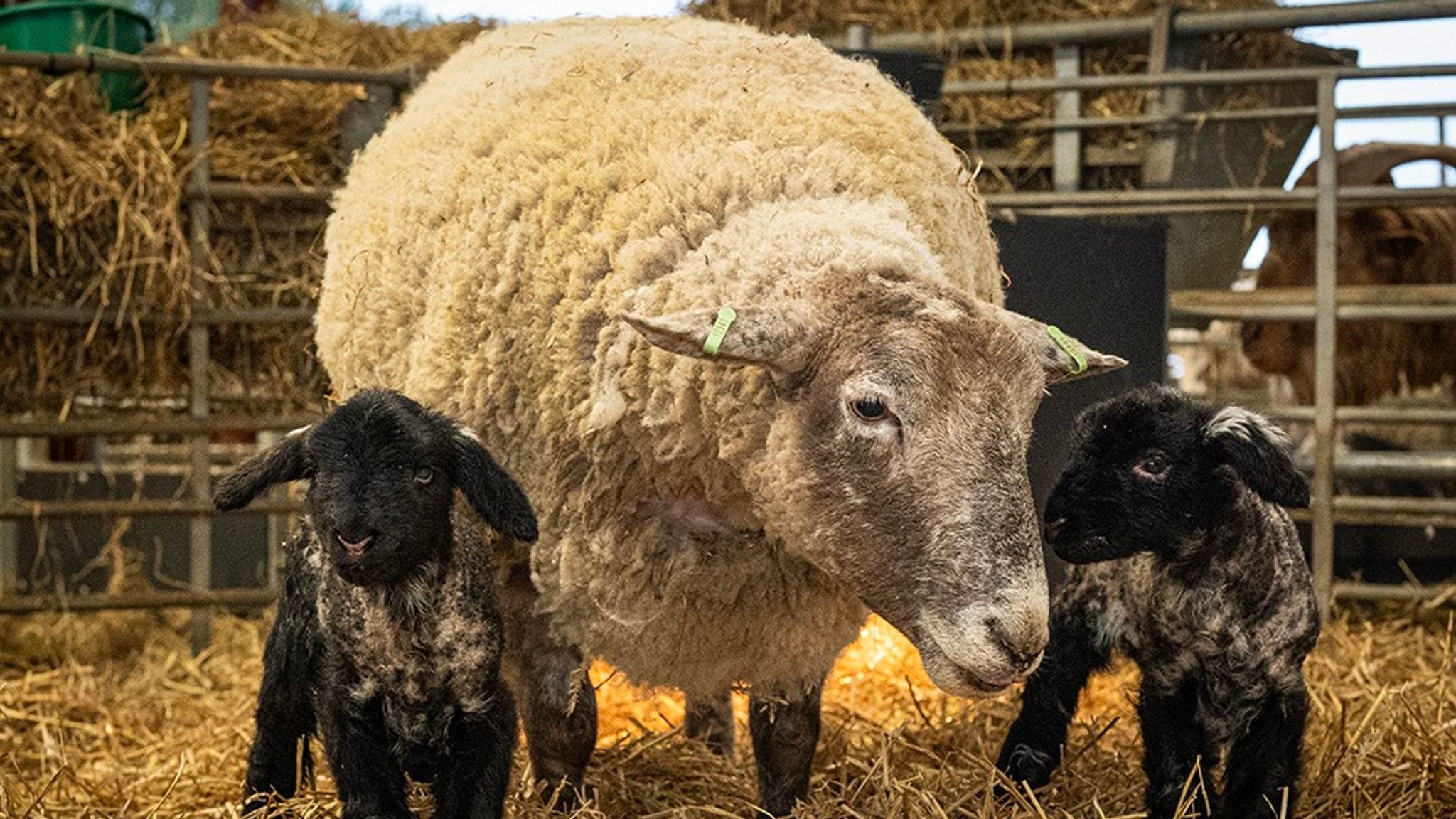
Fiona: No longer the loneliest sheep in the world (photo credit: Dalscone Farm).
“Britain’s loneliest sheep” has given birth for the first time: Fiona won hearts across the globe when she was rescued from the foot of a steep coastal cliff close to the Cromarty Firth in the Scottish Highlands in 2023. Kayaker Jill Turner first spotted the stranded ewe in 2021 and then raised the alarm when she saw her on her own again two years later - which led to Fiona being dubbed “Britain’s loneliest sheep”. Fiona was winched to safety during a daring rescue mission and taken into the care of Dalscone Farm in Dumfries. The farm said she had now traded her title for “world’s best mum” after giving birth to two healthy lambs—a boy and a girl—on Tuesday night—Sky News (h/t Lynn Brown)
After leaving the WHO, Trump officials have proposed a more expensive replacement: Last month: The U.S. formally withdrew from the World Health Organization. Trump had accused the global health alliance of demanding “unfairly onerous payments.” But, in its place: Officials are planning to spend $2 billion a year to replicate some of the WHO’s functions. That is about three times what the U.S. gave to the WHO each year—Washington Post